BHA Training and Certification Tools
Use these tools to understand requirements, track competencies, and prepare certification and recertification applications.
BHA Levels of Practice and Certification Requirements
Behavioral Health Aide (BHA) certification includes four progressive levels of practice: Behavioral Health Aide I (BHA I), Behavioral Health Aide II (BHA II), Behavioral Health Aide III (BHA III), and Behavioral Health Practitioner (BHP). Each level reflects increasing training, supervised practicum, work experience, and clinical responsibility.
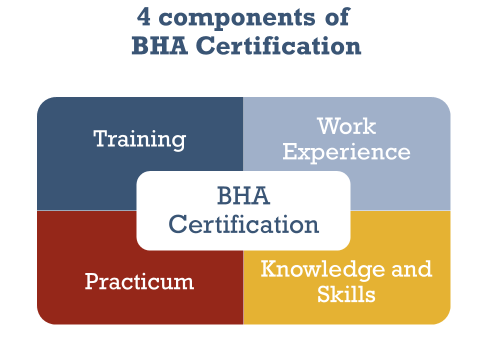
To be certified at any level, applicants must complete the required training, practicum, and work experience and submit documentation verifying completion using the appropriate Training, Practicum, and Work Experience form. Applicants are responsible for maintaining accurate records and ensuring all requirements are met prior to submission.
In addition to documented education and experience, BHAs must demonstrate competency in ten core skill areas. A clinical supervisor evaluates and verifies competency using the Knowledge and Skills Checklist, confirming readiness for certification and continued practice.
Training and Certification Tools
All BHA courses are offered through the ANTHC BHA Training Center, authorized by the CHAPCB to provide training for BHA/Ps and Chemical Dependency Counselors. The Training Center uses a quarter system with courses offered on a rotating schedule. Quarters run as follows:
Q1: January 15 – March 31 | Q2: April 15 – June 30 | Q3: July 15 – September 30 | Q4: October 15 – December 31
BHA I
BHA I — Foundational Behavioral Health Services
BHA I is your entry point into the BHA program. You’ll build core knowledge and skills for delivering prevention, early intervention, and case management in a village-based setting, working under the supervision of a clinical supervisor throughout.
1. Training Courses
Complete the following courses through the ANTHC BHA Training Center. Click any course title to view dates, offerings, and register. You can also view the full 2026 BHA Course Calendar or browse the full catalog.
| Course Title | Quarters | Hrs | Format |
|---|---|---|---|
| General Orientation | Q1, Q2, Q3, Q4 | 28 | Self-paced online |
| Orientation to Behavioral Health Services | Q2, Q4 | 8 | Self-paced online |
| Ethics, Consent, Confidentiality and Privacy | Q1, Q2, Q3, Q4 | 16 | Self-paced online |
| Human Development | Q1, Q3 | 8 | Self-paced online |
| Introduction to Behavioral Health Concerns | Q1, Q3 | 24 | Self-paced online |
| Introduction to Counseling | Q1, Q2, Q3, Q4 | 12 | Blended |
| Introduction to Documentation | Q1, Q2, Q3, Q4 | 12 | Blended |
| Introduction to Case Management | Q1, Q2, Q3, Q4 | 8 | Self-paced online |
| Working with Diverse Populations | Q1, Q2, Q3, Q4 | 12 | Self-paced online |
| Introduction to Group Counseling | Q1, Q2, Q3, Q4 | 8 | Instructor-led online |
| Crisis Intervention | Q1, Q2, Q3, Q4 | 16 | Self-paced online |
| HIV/AIDS and Infectious Diseases | Q1, Q2, Q3, Q4 | 8 | Self-paced online |
| Community Approach to Prevention | Q1, Q3 | 8 | Self-paced online |
| Family Systems I | Q2, Q4 | 16 | Self-paced online |
| Maintaining Health, Wellness and Balance | Q1, Q3 | 8 | Self-paced online |
| No results found. | |||
2. Practicum
Practicum While completing your coursework, you’ll apply your skills with real clients under clinical supervisor observation and evaluation. You must complete three practicum areas before applying for certification.
- Client Orientation to Services including Screening and Initial Intake
- Case Management and Referral
- Village-based Community Education, Prevention, and Early Intervention
3. Work Experience
Complete the required 1,000 hours of work experience.
Work experience is calculated from your THO hire date. Multiply your hours per week by the number of weeks worked. Example: 40 hrs/wk × 13 weeks = 520 hours. Your employer can help confirm your work experience documentation.
4. Applying for BHA I Certification
BHA II
BHA II — Substance Abuse Assessment & Intermediate Clinical Skills
BHA II builds on your BHA I foundation with more advanced clinical tools including substance abuse assessment, treatment planning, motivational interviewing, and group counseling facilitation. You’ll take on more complex client scenarios and demonstrate competency in three new practicum areas.
1. Training Courses
| Course | Quarters | Hours | Format |
|---|---|---|---|
| Psychophysiology and Behavioral Health | Q1, Q3 | 16 | Self-paced online |
| Introduction to Co-Occurring Disorders | Q2, Q4 | 12 | Self-paced online |
| Tobacco Use and Treatment | Q1, Q2, Q3, Q4 | 8 | Self-paced online |
| Diagnostic and Statistical Manual (DSM) Practice Application | Q2, Q4 | 12 | Blended |
| Advanced Interviewing Skills | Q1, Q3 | 16 | Blended |
| ASAM Patient Placement Criteria Practice Application | Q1, Q3 | 12 | Self-paced online |
| Case Studies and Applied Case Management | Q2, Q4 | 8 | Self-paced online |
| Traditional Health-Based Practices | Q2, Q4 | 8 | Blended |
| Intermediate Therapeutic Group Counseling | Q2, Q4 | 16 | Instructor-led online |
| Applied Crisis Management | Q1, Q3 | 8 | Self-paced online |
| Community Needs and Action | Q2, Q4 | 12 | Self-paced online |
| Family Systems II | Q1, Q3 | 16 | Self-paced online |
| Behavioral Health Documentation | Q1, Q3 | 8 | Blended |
| No results found. | |||
2. Practicum
Practicum You must complete three new practicum areas at the BHA II level, demonstrating competency under clinical supervisor observation and evaluation.
3. Work Experience
Complete the required 2,000 hours of work experience.
Work Experience continues to accumulate from your THO hire date. Your employer can help confirm your documented hours.
4. Applying for BHA I Certification
BHA III
BHA III — Advanced Clinical Care & Team Leadership
BHA III is for experienced BHAs moving into complex co-occurring disorders treatment, quality assurance, and clinical team leadership. Courses at this level are more often instructor-led, reflecting the advanced nature of the skills being developed. Note that Behavioral Health Clinical Team Building is offered in-person and in Q2 only — plan ahead.
1. Training Courses
| Course | Quarters | Hours | Format |
|---|---|---|---|
| Treatment of Co-Occurring Disorders | Q1, Q3 | 12 | Self-paced online |
| Advanced Behavioral Health Clinical Care | Q2, Q4 | 20 | Blended |
| Documentation and Quality Assurance | Q1, Q3 | 16 | Self-paced online |
| Applied Case Studies in Alaska Native Culture-Based Issues | Q2, Q4 | 8 | Instructor-led online |
| Behavioral Health Clinical Team Building | Q2 only | 12 | In-person |
| Introduction to Supervision | Q1, Q3 | 16 | Self-paced online |
| Child Development | Q2, Q4 | 20 | Self-paced online |
| No results found. | |||
2. Practicum
You must complete three practicum areas at the BHA III level, demonstrating advanced clinical and leadership competencies under supervisor evaluation.
3. Work Experience
Complete the required 4,000 hours of work experience.
Work Experience continues to accumulate from your THO hire date. Your employer can help confirm your documented hours.
4. Applying for BHA I Certification
BHP
Behavioral Health Practitioner — Village-Based Leadership & Advanced Practice
The BHP is the highest level of BHA certification. BHPs take on supervisory roles, mentor other BHAs across all levels, and deliver care in complex and specialized behavioral health scenarios. Note that Principles and Practice of Clinical Supervision and Child-Centered Interventions are offered in Q1 only — plan your training timeline accordingly.
1. Training Courses
| Course | Quarters | Hours | Format |
|---|---|---|---|
| Village-Based Behavioral Health Services | Q1, Q3 | 20 | Self-paced online |
| Challenges in Behavioral Health Services | Q2, Q4 | 16 | Self-paced online |
| Competencies for Village-Based Supervision | Q2, Q4 | 6 | Blended |
| Principles and Practice of Clinical Supervision | Q1 only | 40 | Blended |
| Child-Centered Interventions | Q1 only | 20 | Blended |
| No results found. | |||
2. Practicum
You must complete three practicum areas at the BHP level, demonstrating supervisory and cultural competency alongside continued leadership of clinical team case reviews.
3. Work Experience
Complete the required 6,000 hours of work experience.
Work Experience continues to accumulate from your THO hire date. Your employer can help confirm your documented hours.
4. Applying for BHA I Certification
Renewal
Keeping Your BHA Certification Active
All BHA certifications are issued for a two-year period. To keep your certification active, apply for renewal before your expiration date.
1. Continuing Education Courses
| Course Title | Quarters | Hrs | CE Requirement Met |
|---|---|---|---|
| ASAM 4th Edition - What's the Difference? CE | Q2 | 3 | NAADAC CE's & Meets General CE Requirement |
| ASAM 4th Edition: Level Of Care CE | Q3 | 8 | Not specified |
| ASAM Criteria 3rd Edition: A Review | Not currently scheduled | Not specified | Not specified |
| Building Professional Relationships and Enhancing Communication Skills CE | Q3 | 2 | NAADAC CE's & Meets General CE Requirement |
| Closing the Stress Cycle CE | Q4 | 2 | Not specified |
| Confidentiality- 42 CFR Part 2 | Q1, Q2, Q3, Q4 | 4 | NAADAC CE's & Meets Confidentiality CE Requirement |
| De-escalation Skills and Conflict Navigation for Providers- CE | Q2, Q4 | 3 | NAADAC CE's & Meets General CE Requirement |
| Ethical Management of Dual Relationships in Rural Practice: Caring for Your Community and Yourself - CE | Q3 | 8 | Meets Cross Cultural Communications & Working with Diverse Populations CE Requirements |
| Grief and Loss - CE | Not currently scheduled | Not specified | Not specified |
| Harm Reduction Model CE | Q4 | 2 | NAADAC CE's & Meets General CE Requirement |
| Motivational Interviewing with Cross Culture Considerations- CE | Q2, Q3 | 4 | NAADAC CE's & Meets Cross Cultural Communication & Working with Diverse Populations CE Requirement |
| Physical & Emotional Regulation for Providers & Clients CE | Q1, Q2, Q3, Q4 | 2 | Not specified |
| Review of Ethics, Consent, Confidentiality & Privacy- CE | Q4 | 8 | NAADAC CE's & Meets Ethics/Consent, Confidentiality, Cross Cultural Communication, Working with Diverse Populations, General CE Requirement |
| Self-Care for Providers- CE | Q1 | 2 | NAADAC CE's & Meets General CE Requirement |
| Telehealth Services: Effectiveness and Use- CE | Q2, Q3, Q4 | 2 | NAADAC CE's & Meets General CE Requirement |
| The Ethics of Self-Care- CE | Not currently scheduled | Not specified | Not specified |
| Trauma Informed Care for Organizations - CE | Q1, Q3 | 2 | NAADAC CE's & Meets General CE Requirement |
| Understanding and Managing Complex Grief - CE | Q1, Q4 | 4 | Meets Cross Cultural Communications & Working with Diverse Populations CE Requirements |
| Working with Clients Who Have Experienced Complex Trauma CE | Q2 | 2 | NAADAC CE's & Meets General CE Requirement |
| No results found. | |||
2. Where to Find Continuing Education
Where to Find Continuing Education
- BHA Course Catalog — ANTHC BHA Training Center CE courses
- 2026 BHA Course Calendar — scroll to the bottom for the CE course list
- Annual BHA Forum — in-person, held in Anchorage; offers CE credit
- In-person behavioral health conferences in-state and out-of-state
- Online CE providers (e.g., CE4Less, Quantum Units Ed) — verify the sponsor is CHAPCB-approved
- Employer Learning Management Systems (e.g., Relias, Healthstream, CareAcademy) — verify the course sponsor
3. Approved CE Sponsors
Approved CE Sponsors – CE must come from a CHAPCB-approved sponsor such as the American Psychological Association (APA), National Association of Social Workers (NASW), or National Association of Alcohol and Drug Abuse Counselors (NAADAC). See the full Approved CE Sponsors list.
Your Certificate of Completion must show: your name, course title, number of hours, date of completion, and the approved sponsor name.